
Best shadow work tools and prompts: 2026 verdict
Best overall: a private shadow work journal. Best for catching a thought before it disappears: voice notes. Best budget option: a role map on paper. These are the best shadow work tools and prompts in 2026 if you want to question an inherited rule without treating every uncomfortable feeling as a command to change your life.
- Best shadow work tools and prompts: start with a private journal and one question about a role you carry.
- Use voice notes when writing makes you edit yourself before you know what you mean.
- A role map helps you separate a responsibility you value from a rule you did not choose.
- Daniel Anderson's private coaching fits people who want to examine identity and self-trust with another person.
Why this matters
You can be grateful for the life you have and still wonder why some parts of it feel borrowed. Responsibilities are real. So is the quiet question beneath them: which expectations still reflect who you are?
Shadow work gives you a way to notice thoughts, reactions, and rules you tend to push aside. In this 2026 guide, the aim is not to find a hidden, perfect self. It is to listen without rushing to explain yourself. If you are unsure whether the question is about a passing mood or a longer pattern, start with signs you have lost touch with who you are.
What makes the best shadow work tools and prompts
A useful tool does not tell you what your answer should be. Judge each option against these criteria before you choose one in 2026:
- A clear starting point: You can begin with one question, rather than trying to account for your whole life.
- Room for uncertainty: The tool lets you leave a question open instead of demanding a revelation.
- Attention to roles: It helps you distinguish what you do for others from everything you are.
- Control over privacy: You decide what stays with you and what you share.
- A way to return: You can revisit a thought and see whether it still feels true.
There is no prize for choosing the most intense prompt. If a question leaves you repeating the same judgment about yourself, choose a gentler one or put the exercise down.
Shadow work tools at a glance
| Tool | Best for | Standout feature | Key limitation |
|---|---|---|---|
| Private shadow work journal | A quiet, repeatable starting point | Keeps questions and answers together | Writing can turn into self-editing |
| Voice notes | Catching an unpolished thought | Lets you speak before finding the right words | Harder to scan for patterns |
| Paper role map | Questioning inherited expectations | Separates roles from the rules attached to them | A short map cannot hold every nuance |
| Daniel Anderson's private coaching | Exploring identity with another person | One-on-one reflection on roles and self-trust | Not a private, self-directed exercise |
1. Private shadow work journal: best for a quiet starting point
A journal gives a recurring question somewhere to land. You can use a notebook you have, keep the entries private, and return to an answer later without having to defend it to anyone.
Start with this prompt: Which part of being dependable feels chosen, and which part feels compulsory? Write for 5 minutes. Then underline any sentence that begins with I should, I have to, or people need me to. Do not assume those sentences are false. Ask who taught you each rule and whether you still agree with it.
Your answer might be practical rather than dramatic: you value showing up for people, but you resent never being allowed to need anything yourself. Both thoughts can be present. The page only needs to make room for them.
Private journal pros:
- Gives you a place to return to the same question.
- Lets you choose what stays private.
- Works with plain language; you do not need a special method.
Private journal cons:
- You can polish an answer until it stops sounding like you.
- Repeated writing can become a way to postpone a conversation you already know you want to have.
Best for: Someone who wants to begin alone and look back at what they wrote. Verdict: Buy only if you need a notebook; otherwise, start with the paper you have.
In 2026, the best journal prompt is one you can answer honestly, not one that sounds profound. Try: What do I believe I must never let other people see? If that feels too sharp, ask: What am I tired of having to prove?
2. Voice notes: best for catching an unpolished thought
A voice note can hold a thought that disappears when you sit down to write. Speak into a recording device you already use, then stop. You do not have to make the recording coherent or listen to it immediately.
Try this prompt when you notice yourself saying you are fine while feeling something else: What did I want to say before I chose the acceptable answer? Speak for 2 minutes. If you get stuck, describe the moment rather than explaining what it means. What was asked of you? What did you say? What did you hold back?
Listen later only if it helps. You might hear a wish, a boundary, or an uncertainty you could not name in the moment. A recording is a way to hear your words, not proof that your first reaction is the whole truth.
Voice note pros:
- Catches wording before you edit it for an audience.
- Fits a thought that arrives away from your journal.
- Makes it possible to pause without finishing the question.
Voice note cons:
- Recordings are less convenient to scan than written entries.
- Speaking aloud can feel less private when other people are nearby.
Best for: Someone who knows what they feel while talking but loses the thought when trying to write it neatly. Verdict: Try it. In 2026, use the method that lets you be plainspoken; do not keep recording just to produce an answer.
3. Paper role map: best for questioning inherited expectations
A role map is a small written exercise, not a verdict on the people who rely on you. Put one role you carry on the page. Beneath it, separate what you value about that role from the rule you feel you must obey to keep it.
Use these prompts in order:
- Role: What name do I give this responsibility?
- Inherited rule: What do I believe a person in this role is never allowed to do?
- Cost: What do I set aside to follow that rule?
- Choice: Which part do I still choose, and which part do I want to question?
For example, you can value being available to family while questioning the rule that a capable person does not ask for help. The map does not require you to stop caring for anyone. It asks whether care must always come at the expense of your own voice.
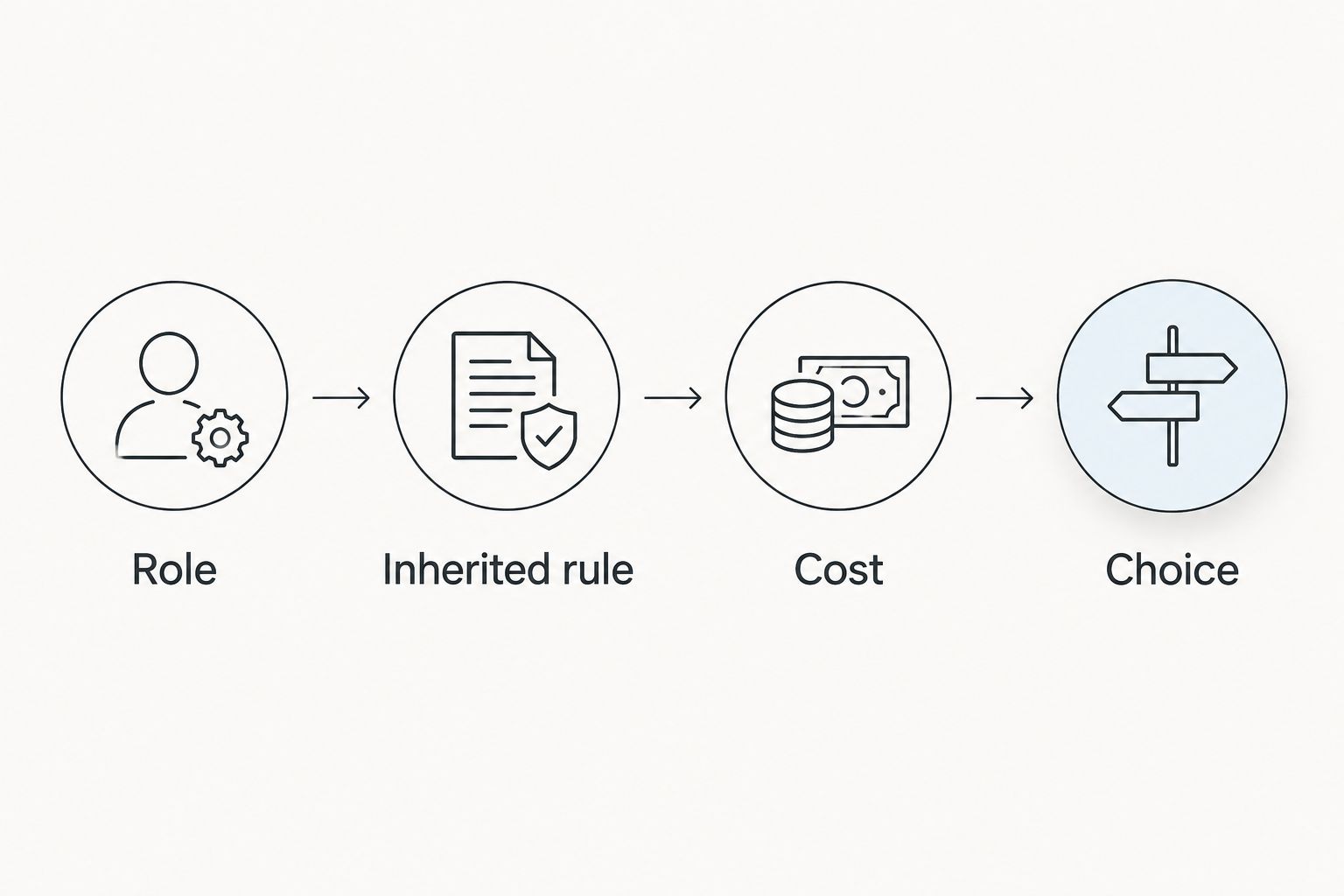
Give the map 10 minutes, then leave it alone for a while. When you return, check whether the rule is something you consciously believe or something you learned to perform. You do not need to settle that question on the same page.
Paper role map pros:
- Makes a vague pressure easier to name.
- Leaves room to value a role without accepting every rule attached to it.
- Needs only paper and a question.
Paper role map cons:
- A few labels cannot capture the whole history of a relationship.
- It is easy to turn the choice column into a demand for an immediate decision.
Best for: Someone who keeps describing themselves by what others need from them. Verdict: Try it. For shadow work in 2026, a role map is most useful when it opens a question rather than forcing a break with your responsibilities.
4. Daniel Anderson's private coaching: best for shared reflection
Daniel Anderson offers one-on-one spiritual identity coaching for people examining the roles, expectations, beliefs, and experiences that have shaped them. It is a different choice from a journal or a prompt: you bring your questions into a private conversation instead of carrying every answer alone.
A useful question to bring is: Who am I trying to be acceptable to when I say yes? Another is: What would I still choose if I stopped trying to prove I am dependable? Neither question tells you to abandon your commitments. Both let you look at the difference between care and obligation.
Daniel Anderson's spiritual perspective makes room for the idea that we are spiritual beings having a human experience, not merely humans chasing a spiritual experience. You do not need to force a meaning onto every feeling for the question to matter. You can notice an inner pull, postpone a decision, and listen again.
Daniel Anderson coaching pros:
- Offers another person to talk with as you examine identity and purpose.
- Centers questions about roles, self-trust, and conscious choice.
- Does not require you to arrive with a fixed answer.
Daniel Anderson coaching cons:
- It is not a private solo practice like journaling.
- Coaching is not therapy; it should not be treated as a substitute for therapy.
Best for: Someone who wants one-on-one reflection rather than another list of prompts. Verdict: Consider a conversation. Daniel Anderson's coaching fits best when you want to speak plainly about the life you are living, not when you want someone else to decide what it means.
How these tools were ranked
The order follows the criteria above: a clear starting point, room for uncertainty, attention to roles, privacy, and a way to return. A journal comes first because you can begin with one question and revisit your own words. Voice notes come next when writing gets in the way; a role map serves the narrower task of examining an inherited rule.
Private coaching is last in this list because it asks for a different kind of participation, not because the questions are less important. In 2026, choose the format that fits how you can listen honestly. A tool that looks good on a list but makes you perform an answer is the wrong tool for that moment.
Which shadow work tool should you choose?
Start with a private journal if you are undecided. Ask one question about a role you carry, write what comes up, and leave enough space to change your mind later. If writing makes you sound more certain than you feel, try a voice note. If the same expectation keeps appearing, make a role map.
If you want to explore those questions with another person, Daniel Anderson offers private spiritual identity coaching. A complimentary coaching conversation gives you a way to discuss whether that kind of reflection fits. There is no need to turn an unanswered question into an urgent decision.
Explore a coaching conversation
Bring a question about your roles, identity, or sense of purpose.
FAQ
What are the best shadow work tools and prompts for beginners?
Start with a private journal and one prompt: Which part of being dependable feels chosen, and which part feels compulsory? You can return to the answer without deciding what it means today.
Is a voice note better than a shadow work journal?
A voice note is better when writing makes you edit your thoughts too soon. A journal is easier to revisit when you want to notice a recurring rule.
What is a role map in shadow work?
A role map puts a responsibility, an inherited rule, its cost, and a possible choice on the page. It helps you question the rule without dismissing the responsibility.
What if I cannot answer a shadow work prompt?
Leave the question open or choose a gentler one. Not having an answer does not make the exercise a failure, and you do not need to push past what you want to share.
Do I have to change my life after doing shadow work?
No. Noticing a pattern is different from deciding what to do about it. You can honor your responsibilities while questioning whether every expectation still belongs to you.
Can private coaching replace therapy?
No, coaching is not therapy. Daniel Anderson offers one-on-one spiritual identity coaching focused on questions of identity, purpose, roles, and self-trust.
Which shadow work tool is best if I feel pulled toward a different life?
A journal is a quiet place to describe the pull before you name it or act on it. A role map can help you ask which expectation you are questioning without assuming you already know the answer.
One last thing
The rule you question does not have to be one you hate. You might value being the person others count on. Ask whether being dependable also permits you to say what you need. That is a useful question to carry beyond any shadow work exercise in 2026.