
Best journals for a daily spiritual practice: 2026 blank pick
Best overall for a daily spiritual practice in 2026: a blank notebook. Best for structure: a guided reflection journal. Best for noticing what sustains you: a gratitude journal. Best for prayer: a prayer journal. Best for writing wherever you are: a digital journal. If you are trying to hear your own voice beneath your roles, start with the blank notebook.
- The best journals for a daily spiritual practice start with a blank notebook when you need room for your own questions.
- Choose a guided reflection journal if an open page leaves you stuck; choose a prayer journal if prayer anchors your practice.
- A gratitude journal helps you notice what sustains you, but it should not require you to dismiss difficult feelings.
- Coach Daniel Anderson is best for people questioning their roles who want private coaching alongside their own reflection.
Why this matters
You can be dependable and still feel unsure who you are when nobody needs anything from you. Your responsibilities are real; so is the question underneath them. A journal gives that question somewhere to land without demanding an immediate answer.
For some people, spiritual practice includes prayer. For others, it means sitting quietly with what feels true, what feels inherited, and what they cannot yet name. The right journal makes room for your interpretation. It does not tell you what you are supposed to discover.
That distinction matters more than a cover or a set of prompts. A journal that turns every entry into a performance can become another role to maintain. In 2026, choose a format you can return to honestly, including on days when you have nothing uplifting to report.
Coach Daniel Anderson works with people who want to understand who they are beneath roles and expectations. A journal can support that reflection between conversations; it cannot do the work of a private coaching relationship for you.
What makes the best journal for a daily spiritual practice?
Use these criteria before choosing a format. The best journal is not the one with the most prompts. It is the one that gives you enough support to begin and enough freedom to tell the truth.
- Room for your own voice: Can you write what you actually think, or does the format push you toward a prescribed answer?
- A starting point you can use: If a blank page stops you, does the journal offer a question that helps without deciding what your answer should be?
- Space for uncertainty: Can you record doubt, frustration, and unfinished thoughts alongside gratitude or prayer?
- A format you will revisit: Do its pages or prompts suit the way you already make time to reflect?
- Privacy you understand: Can you keep your writing in a place that feels appropriate for thoughts you do not want to share?
Your answer to those questions can change. What helps you notice a persistent inner pull might not be what you want when you are ready to ask what it means.
The options at a glance
These are journal formats, not product recommendations. The table compares what each format asks of you in 2026; it does not assume one spiritual practice fits everyone.
| Journal format | Best for | Standout feature | Key limitation |
|---|---|---|---|
| Blank notebook | Hearing your own voice | No prescribed prompts | The open page can feel difficult to start |
| Guided reflection journal | Getting started with questions | Prompts provide an entry point | Prompts can steer your answers |
| Gratitude journal | Noticing what sustains you | A repeatable focus | It can leave hard feelings unspoken |
| Prayer journal | Reflecting through prayer | Space to address what you believe | It may not fit a practice without prayer |
| Digital journal | Writing wherever you are | Entries live on a device | The device can compete for your attention |
1. Blank notebook: best journal for hearing your own voice
A blank notebook does not supply a topic, a belief, or a conclusion. You decide whether today's entry is a question, a prayer, a memory, or a sentence about something you noticed. This is the best starting point if your daily spiritual practice is about separating your own voice from what you have been taught to say.
That freedom has a cost: you have to find the first words. Start with a plain question rather than trying to produce an insight. What did I agree to today that I did not want? What felt quietly right? You do not need to answer both.
Blank notebook pros:
- Gives inherited beliefs and new questions equal room on the page.
- Lets you change how you write without changing journals.
- Does not ask you to make a difficult day sound positive.
Blank notebook cons:
- Offers no prompt when you cannot tell where to begin.
- Makes it easier to avoid a question you already know you need to ask.
Best for: People who want to listen before they label what they are experiencing. Verdict: Buy a blank notebook if you want the most room for your own words.
2. Guided reflection journal: best for getting started
A guided reflection journal gives you questions to answer. That structure helps when you want to write but keep circling the same first sentence. Look at the actual prompts before choosing one: questions about values, expectations, and choices serve a different purpose from prompts that require a cheerful account of every day.
A useful prompt opens a door. It does not insist that you walk through it or reach a particular conclusion. If a question does not fit, leave it unanswered and write the question you wish it had asked.
Guided reflection journal pros:
- Gives you somewhere specific to begin.
- Helps you notice which questions you resist or return to.
- Can make reflection feel approachable when you have limited time.
Guided reflection journal cons:
- The author's assumptions can shape what you notice.
- Repeated prompts can make honest writing feel like completing a task.
Best for: People who want a question in front of them, not a script for their lives. Verdict: Buy a guided reflection journal if prompts help you begin; skip one that tells you what your answers should mean.
3. Gratitude journal: best for noticing what sustains you
A gratitude journal asks you to pay attention to what you appreciate. That can be part of a spiritual practice without becoming its whole purpose. You might write about a conversation that stayed with you and also admit that you felt tired or uncertain afterward.
Keep the page open to both truths. If the format leaves room only for what went well, it can make you feel obliged to edit out a difficult day. You are allowed to notice what supports you without calling everything else good.
Gratitude journal pros:
- Gives your attention a clear place to start.
- Makes room to notice ordinary moments you want to remember.
- Works alongside a broader reflection practice.
Gratitude journal cons:
- A narrow format can leave questions about identity untouched.
- It can feel forced when you need to write about grief, anger, or doubt.
Best for: People who want to notice what sustains them without denying what is hard. Verdict: Buy a gratitude journal as one part of your practice; skip any format that makes honesty feel unwelcome.
4. Prayer journal: best for reflecting through prayer
A prayer journal gives you a place to address what you believe, ask for guidance, or put words to a silence you do not understand. Your entries do not have to sound certain. A question you bring to prayer is still a question worth writing down.
Choose this format because prayer belongs in your life, not because you think spiritual practice requires it. If your understanding of spirituality is changing, a blank notebook might give you more freedom to explore that change without an expected form of address.
Prayer journal pros:
- Keeps prayer and reflection in the same place.
- Gives you room to write questions you do not say aloud.
- Lets you return to what you previously asked or noticed.
Prayer journal cons:
- A prescribed prayer format may not fit your beliefs.
- It is less useful if prayer is not part of how you reflect.
Best for: People who already use prayer to listen, question, or express what matters. Verdict: Buy a prayer journal if the format fits your practice; wait if you are still deciding whether prayer belongs in it.
5. Digital journal: best for writing wherever you are
A digital journal is writing kept on a device rather than in a paper book. It can suit you if you want to capture a thought when it arrives and return to it later. The question is not whether typing is spiritual enough. It is whether the device helps you pay attention or pulls you away from what you came to write.
Decide how you want to handle privacy before you put personal entries on a device. The available controls depend on the tool you choose, so check them rather than assuming your writing is private. If notifications interrupt your reflection, paper may be the simpler choice.
Digital journal pros:
- Lets you write when a notebook is not with you.
- Makes it easy to add to an unfinished entry.
- Suits people who find typing more natural than handwriting.
Digital journal cons:
- Notifications can interrupt a quiet moment.
- Privacy depends on the tool and settings you choose.
Best for: People who want to capture thoughts away from their usual writing place. Verdict: Buy into a digital format if it helps you return to your words; skip it if the device keeps taking your attention elsewhere.
How these journals were ranked
The blank notebook comes first because it places the fewest assumptions between you and your own words. The guided journal comes next because a useful question can make starting easier. The other formats serve clearer purposes: gratitude, prayer, or writing on a device. This is a ranking by fit for identity-focused reflection in 2026, not a claim that one way of writing is more spiritual than another.
A small practice to try before choosing
You do not need a new journal to find out what kind of page helps. Use any place where you can write privately. Try these questions, and stop when you have said what you mean:
- Name the role: Who did you feel expected to be today? You can value that responsibility and still question its hold on you.
- Notice the rule: What unspoken instruction followed you? It might sound like: A capable person does not ask for help.
- Ask what matters: Beneath the rule, what did you want, need, or care about? Leave the question open if you do not know.
- Choose one action: Is there a small, ordinary choice that would respect what you noticed? Writing down that you are not ready to act is also an honest entry.
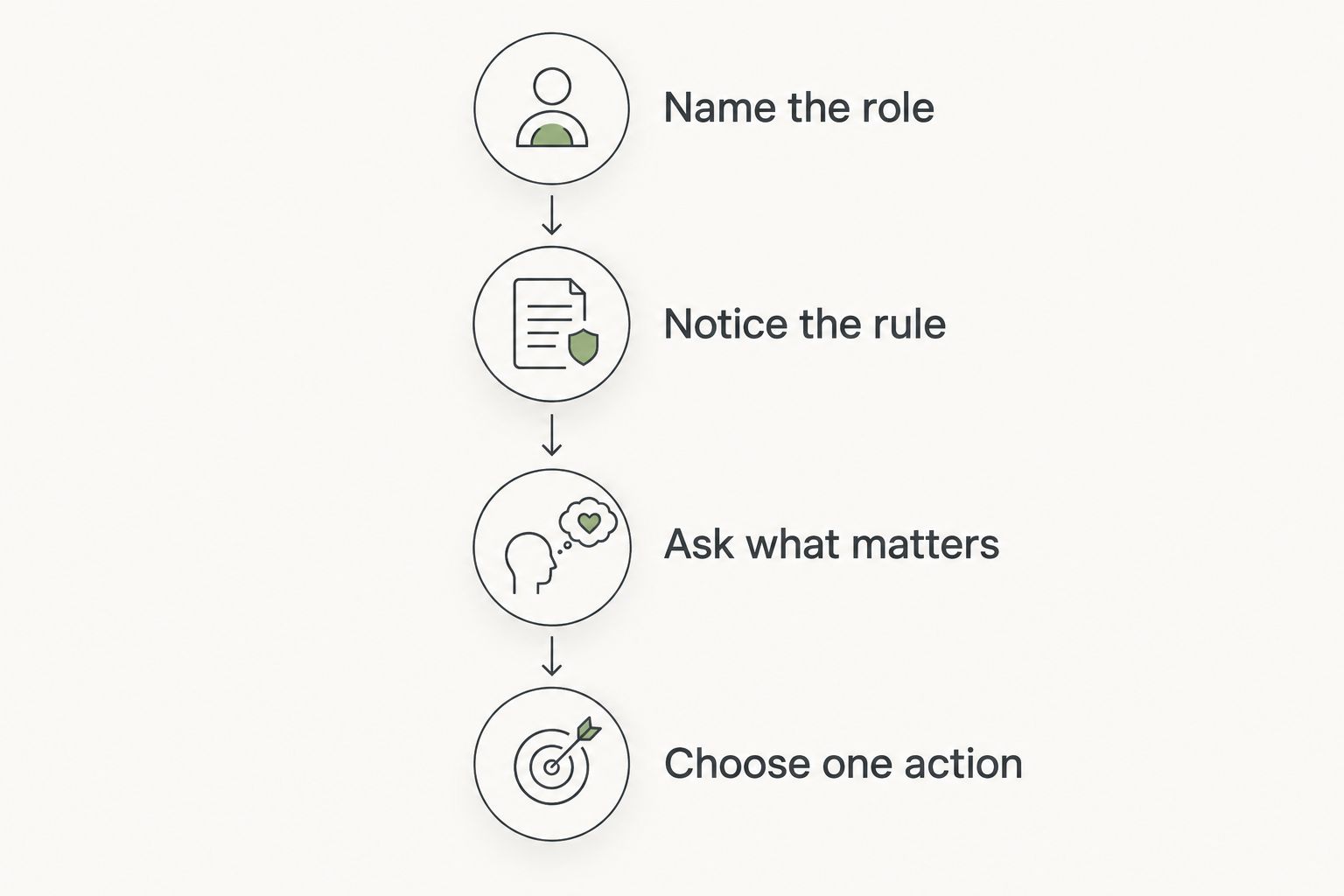
If the questions give you enough to write, a blank notebook is likely the better fit. If you keep wishing the page would ask the next question, look at guided journals. Neither answer says anything about how committed you are to a spiritual practice.
Which journal should you choose in 2026?
Choose a blank notebook unless you know you need more structure. It makes space for the words you have and the ones you have not found yet. Choose a guided reflection journal if starting is the obstacle, a gratitude journal if you want a place to notice what sustains you, or a prayer journal if prayer is already part of how you listen. Choose digital writing if access matters more to you than a page away from your device.
A journal is not a test of whether you are living with purpose. Coach Daniel Anderson's spiritual identity coaching is for people examining the roles and expectations that have shaped them; it is not a journal, and coaching is not therapy. Writing can help you bring a clearer question to a private coaching conversation. It cannot guarantee an answer before you are ready to hear one.
FAQ
What's the best journal for a daily spiritual practice in 2026?
A blank notebook is the best starting point if you want to hear your own voice without prescribed prompts. Choose a guided reflection journal if an open page keeps you from writing.
Is a guided journal better than a blank notebook?
A guided journal is better when a question helps you begin; a blank notebook is better when you need freedom to follow your own questions. Read the prompts before deciding whether they make room for uncertainty.
Can a gratitude journal be a spiritual practice?
Yes, a gratitude journal can be part of a spiritual practice if noticing what sustains you matters to you. Leave room elsewhere to write honestly about what is difficult, too.
Do I need a prayer journal to journal spiritually?
No, you do not need a prayer journal to reflect on meaning, identity, or what you believe. A prayer journal fits when prayer is already part of how you reflect.
What should I write when I don't know who I am outside my roles?
Start with a role you carried today and ask what you felt expected to do. You do not have to reject that role or define a new identity in one entry.
Is digital journaling as useful as writing on paper?
Digital journaling is useful when typing helps you capture and revisit your thoughts. Choose paper if the device distracts you, and check privacy settings before storing personal writing digitally.
Can journaling replace spiritual identity coaching?
No, journaling gives you a private place to reflect, while spiritual identity coaching involves a conversation with another person. Coach Daniel Anderson offers private coaching for people exploring who they are beneath roles and expectations; coaching is not therapy.
One last thing
The entry you resist might tell you more than the one that reads well. If the same quiet question keeps returning in 2026, you do not have to name it immediately or rearrange your life around it. Write it as it is. Then notice whether the journal you chose lets you stay with the question without pretending you already know the answer.